When might a total knee replacement be needed?
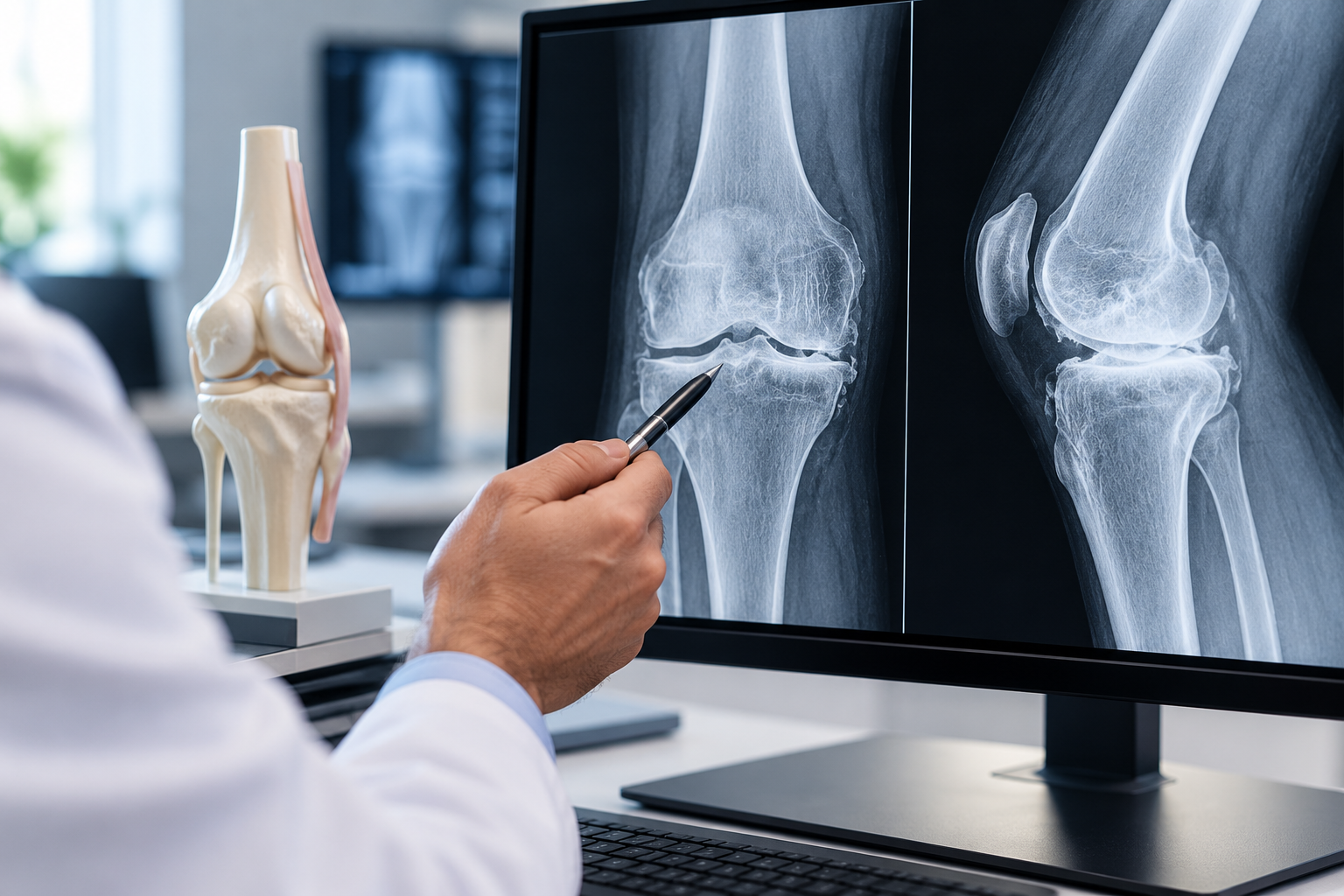
Total knee replacement may be considered when arthritis affects several areas of the knee and pain, stiffness or loss of movement is having a significant impact on everyday life. This differs from arthritis confined to a single compartment, which may be suitable for partial knee replacement.
The decision is not based on an X-ray alone. Symptoms, examination findings, imaging and the response to appropriate non-surgical treatment are considered together.
- Widespread arthritisDamage affecting more than one area of the knee joint.
- Persistent pain and stiffnessSymptoms that significantly affect walking, everyday activities or quality of life.
- Non-surgical treatment is no longer providing sufficient reliefAppropriate treatments such as physiotherapy, activity modification, medication or injections may have already been explored.
Not everyone with knee arthritis needs a total knee replacement. Mr Bhangoo will assess the pattern and extent of arthritis alongside your symptoms and individual circumstances to determine the most appropriate treatment approach.
What is actually replaced during a total knee replacement?

Despite its name, a total knee replacement does not mean removing the entire knee. Instead, the damaged joint surfaces at the ends of the thigh bone and shin bone are carefully prepared and resurfaced with precisely positioned implant components. The surrounding bone and soft tissues are preserved where appropriate.
A smooth polyethylene insert sits between the metal components, creating a new bearing surface that allows the knee to move.
- Femoral componentA metal component resurfaces the damaged end of the thigh bone (femur).
- Tibial componentA metal baseplate is positioned on the prepared upper surface of the shin bone (tibia).
- Polyethylene insertA smooth, durable plastic insert sits between the metal components and forms the new bearing surface of the joint.
The kneecap is assessed during surgery and managed according to the needs of the individual knee.
Planning your knee replacement
Every knee is different. Careful planning before total knee replacement helps determine the appropriate implant size, position and alignment for the individual patient.
Mr Bhangoo reviews your symptoms, examination findings and imaging to understand both the extent of arthritis and the anatomy of your knee.
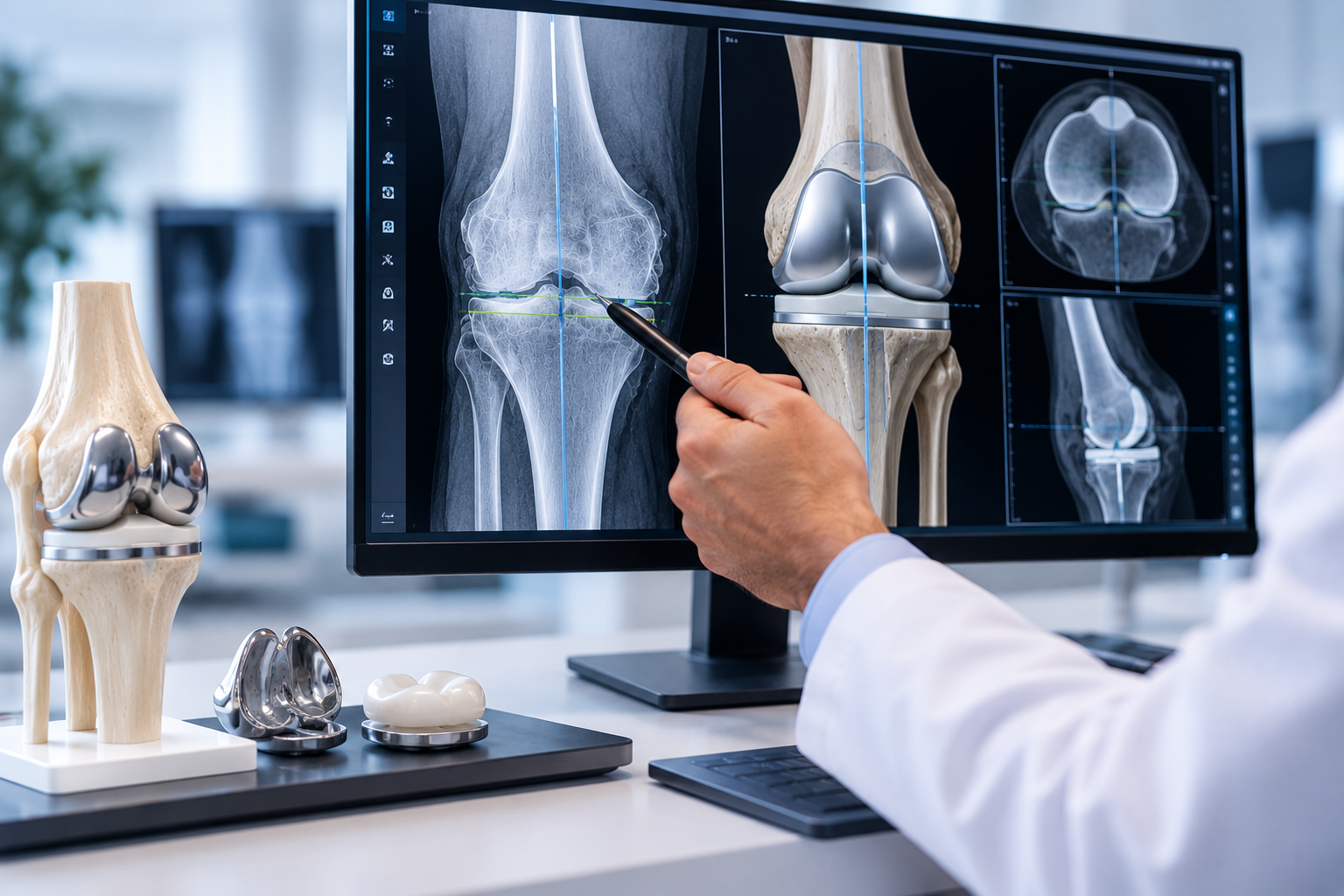
Planning considers factors including:
- Knee anatomyThe shape and dimensions of the individual knee.
- Implant positionPlanning the size and position of the replacement components.
- AlignmentConsidering how the knee and leg are aligned as part of the overall surgical plan.
- Soft-tissue balanceAssessing the ligaments and surrounding soft tissues to help achieve a stable, balanced knee.
The aim is to create a carefully planned knee replacement tailored to the individual rather than applying exactly the same approach to every patient.
What happens during total knee replacement surgery?
During total knee replacement surgery, the damaged surfaces of the knee are carefully prepared and resurfaced with implant components selected and positioned according to the surgical plan.

- Preparing the joint
The damaged surfaces at the ends of the femur and tibia are carefully prepared to receive the replacement components.
- Positioning the implants
The femoral and tibial components are positioned, with a polyethylene insert placed between them to create the new bearing surface.
- Checking alignment and balance
The knee is assessed through its range of movement, with alignment, stability and soft-tissue balance checked before the final components are secured.
- Completing the procedure
Once the knee is stable and moving appropriately, the surgical site is closed and the patient begins the early stages of recovery and rehabilitation.
The Triathlon total knee replacement system
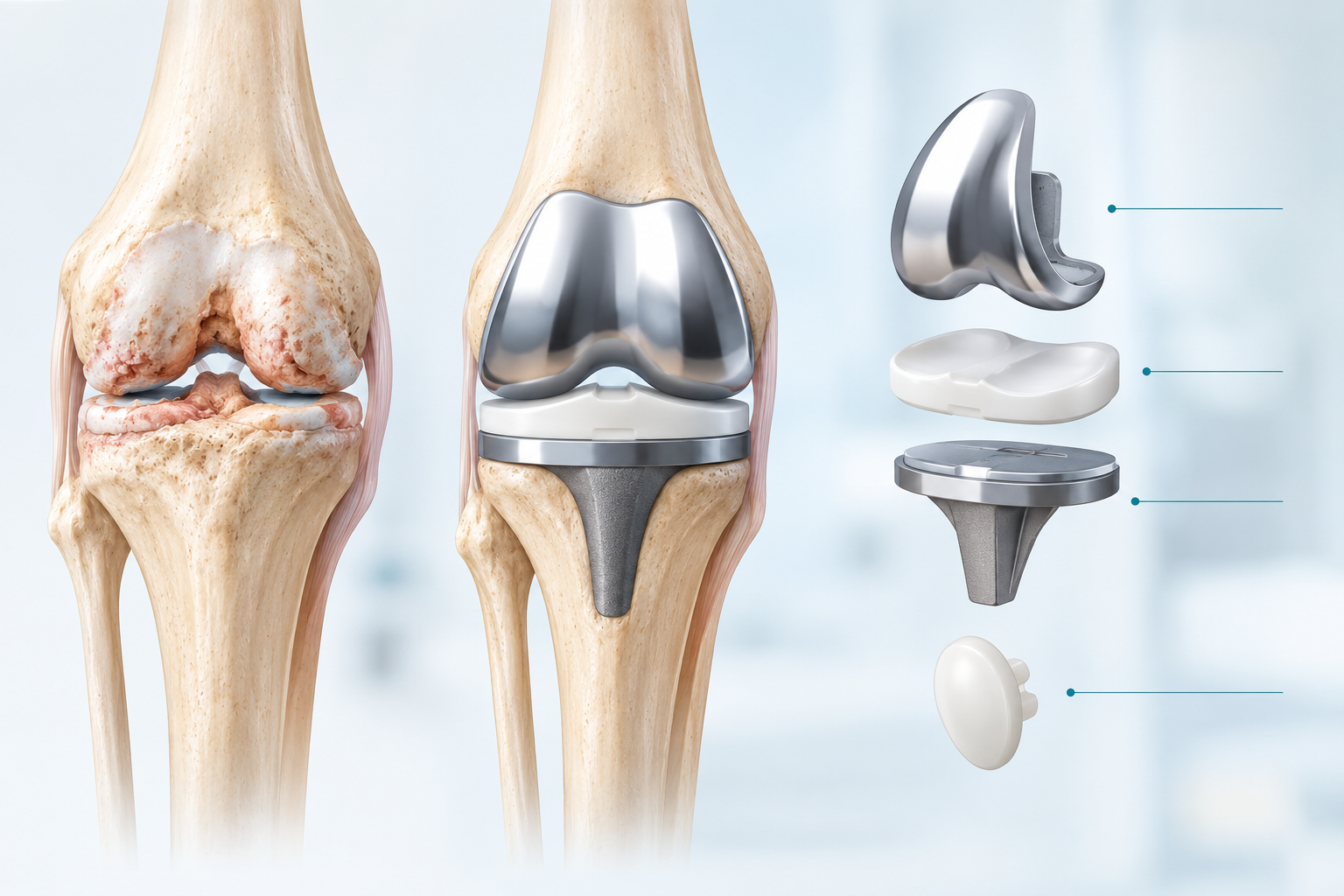
Mr Bhangoo uses the Triathlon Total Knee System for total knee replacement surgery. It is a well-established knee replacement system with a long clinical history and is used internationally.
The system includes components that resurface the ends of the thigh bone (femur) and shin bone (tibia), with a smooth polyethylene bearing between them.
Choosing and positioning the implant
The implant is only one part of a successful knee replacement. The appropriate component size and position are planned for the individual knee, taking into account anatomy, alignment, stability and soft-tissue balance.
Where appropriate, the Triathlon system can also be used with Mako robotic-assisted surgery.
Mako robotic-assisted total knee replacement
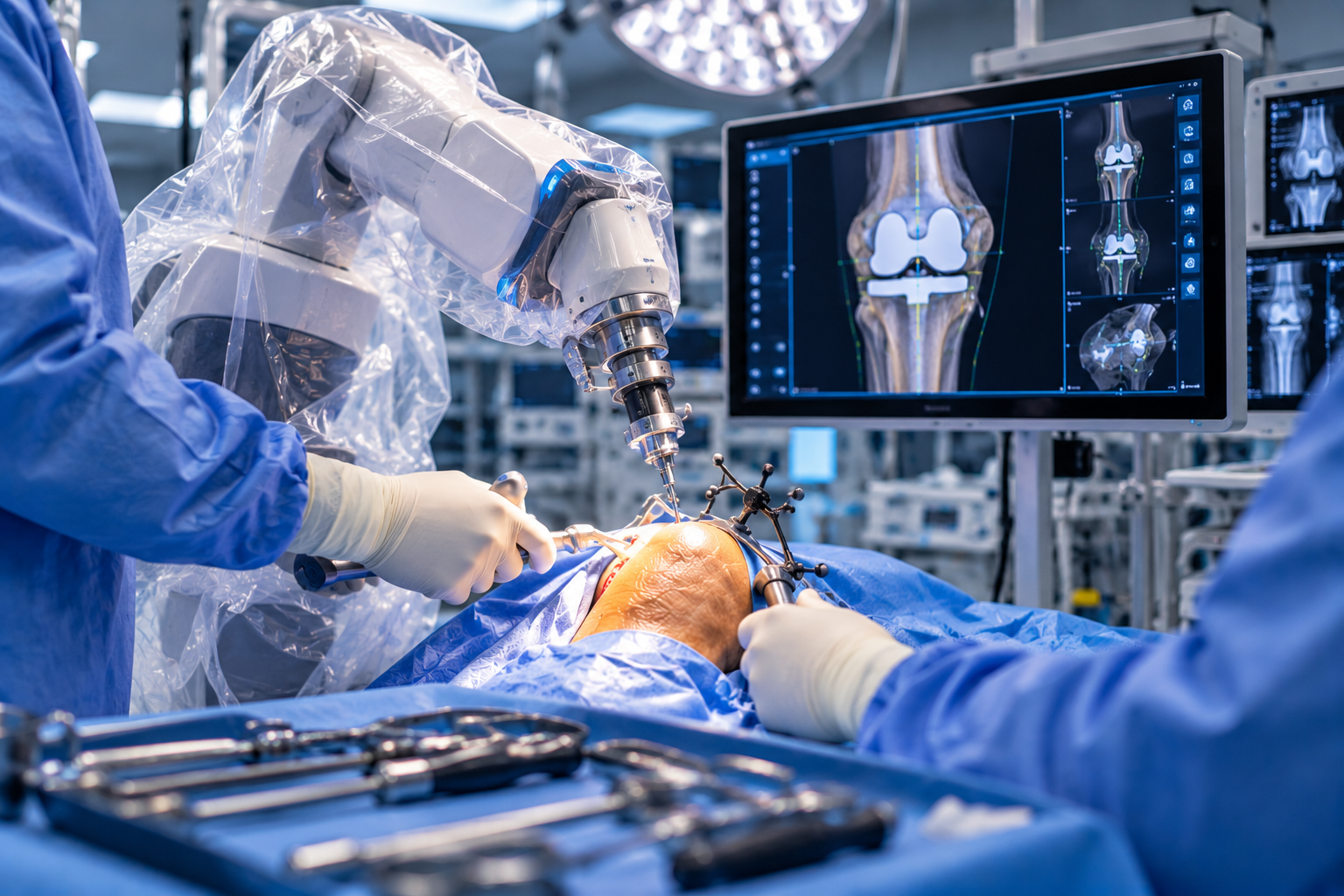
Mako is a robotic-assisted surgical system that can be used by Mr Bhangoo when performing total knee replacement with the Triathlon knee system.
The technology provides detailed information about the patient’s knee and allows the planned implant position to be assessed and refined during surgery.
Plan
Information about the individual knee is used to create a personalised surgical plan, including the intended position and alignment of the implant components.
Assess
During surgery, Mr Bhangoo can assess the knee’s anatomy, alignment and soft-tissue balance and make appropriate adjustments to the plan.
Assist
The robotic arm assists Mr Bhangoo in carrying out the planned bone preparation within defined boundaries before the replacement components are positioned.
Mr Bhangoo remains in control
Mako does not independently perform the knee replacement. The technology provides information and surgical assistance, while Mr Bhangoo makes the clinical decisions and performs the operation.
Recovery and rehabilitation after total knee replacement

Recovery after total knee replacement is a gradual process. Early movement and physiotherapy are important parts of rehabilitation, with activity building progressively as strength, movement and confidence improve.
Early mobilisation
Patients are usually encouraged to begin moving soon after surgery with appropriate support from the clinical and physiotherapy team.
The first few weeks
The initial focus is on walking safely, managing swelling, restoring knee movement and gradually becoming more independent with everyday activities.
Building strength and function
Physiotherapy progresses as recovery allows, with exercises aimed at improving strength, movement, balance and functional ability.
Longer-term recovery
Improvement continues over time. The pace of recovery and return to activities varies according to the individual, their starting point and their progress following surgery.
Knee Replacement Recovery Timeline: What to Expect Week by Week
Specialist expertise in total knee replacement

Mr Navjot Bhangoo is a Consultant Orthopaedic Knee Surgeon specialising in the assessment and surgical treatment of knee conditions, including knee replacement surgery.
His approach to total knee replacement combines careful clinical assessment with individual surgical planning, taking into account the pattern of arthritis, knee anatomy, alignment and the patient’s symptoms and goals.
He performs total knee replacement using established surgical techniques and, where appropriate, robotic-assisted technology such as Mako.
The aim is to recommend the treatment and surgical approach most appropriate for the individual patient rather than taking a one-size-fits-all approach to knee replacement.