
Knee Replacement Recovery Timeline: What to Expect Week by Week
Recovery after knee replacement is a gradual process, not a single finish date. Many people become independent in everyday activities within weeks, while strength, stamina, swelling and confidence can continue to improve for many months. Partial knee replacement often has a quicker early recovery than total knee replacement, but every timeline is individual.
Your surgeon and physiotherapist’s instructions take priority over any general guide, particularly if you have another health condition or a more complex procedure.
The first 1 to 3 days
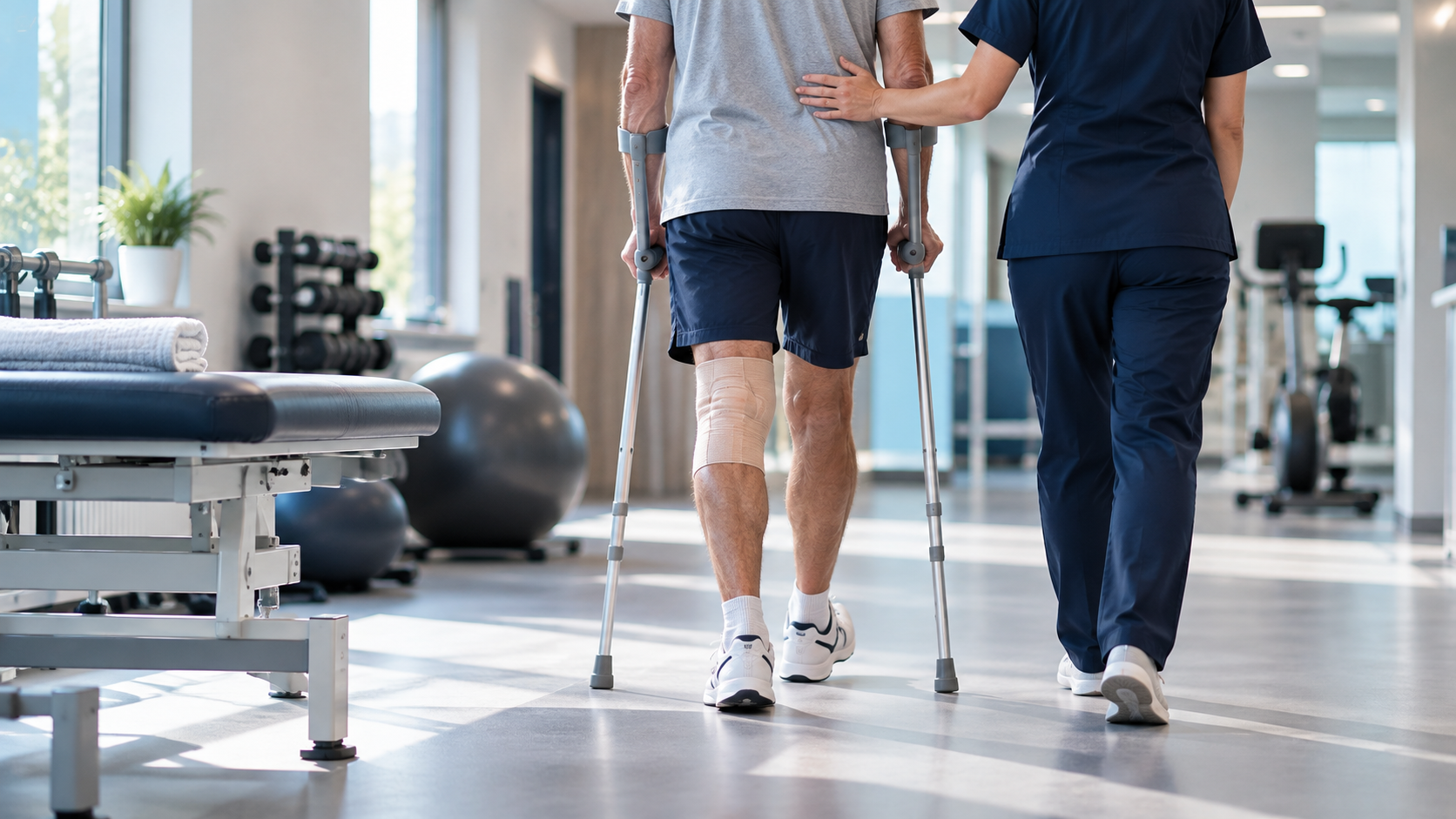
You will be encouraged to stand and walk with help soon after surgery. Pain relief, exercises and early movement are important parts of the recovery programme. At first, you are likely to use crutches or a walking frame. Many patients can usually leave hospital around 1 to 4 days after knee replacement when there are no signs of complications and they can move safely. Some partial knee replacements may follow an accelerated or day-case pathway when clinically appropriate.
Before discharge, you should understand:
- how to take your medicines;
- how to care for the wound;
- which exercises to perform;
- how to use walking aids;
- how to reduce the risk of blood clots; and
- who to contact if you are worried.
Week 1: comfort, swelling and safe movement
The early priorities are regular short walks, prescribed exercises, swelling control and rest. The knee will be sore and swollen. Elevating the leg as advised and using cold therapy if recommended can help. Avoid measuring success against somebody else’s online recovery story. In the first week, safe progress matters more than distance or speed.
Contact the surgical team promptly if you develop increasing wound redness or leakage, worsening pain that is not controlled, a high temperature or other symptoms identified in your discharge and aftercare advice. Sudden breathlessness, chest pain or symptoms of a blood clot require urgent medical attention.
Weeks 2 to 6: building independence
During this phase, walking and exercises usually become easier. The aim is to improve knee movement, muscle control and confidence while gradually reducing walking aids when it is safe to do so.
Wound clips or stitches may be removed at around 10 days if they are not dissolvable. A follow-up appointment is often arranged at around six weeks, although local pathways differ. Many people can begin managing more daily tasks, but swelling after activity is still common. Increasing activity too quickly can make the knee more uncomfortable without speeding long-term recovery.
Driving after knee replacement
The NHS advises waiting at least six weeks after total knee replacement and three weeks after partial knee replacement, and checking with your doctor that you are fit to drive. These are general minimums, not automatic clearance. You must be able to get in and out of the vehicle safely, control it fully and perform an emergency stop without hesitation. You should not drive while medication impairs you. Check your motor insurer’s requirements and follow the advice of your own surgeon.
Returning to work
The NHS gives a broad guide of around six to twelve weeks, but the right timing depends heavily on the job. Desk-based work may be possible earlier than a role involving prolonged standing, lifting, kneeling, climbing or driving. A phased return can be useful.
Weeks 6 to 12: function and confidence
By this stage, many patients are walking more independently and returning to a wider range of normal activities. Rehabilitation continues to focus on strength, balance, knee movement and functional goals. Low-impact activity may be introduced according to the plan from your clinical team.
The exact timing for swimming, cycling, golf and gym work depends on wound healing, movement, strength and the type of replacement.
Three months and beyond
The early recovery may feel largely complete, but improvement can continue for up to a year. Swelling and stiffness can take time to settle, especially after a busy day. Consistent strengthening and sensible progression remain important.
Low-impact activities are generally kinder to a knee replacement than repeated high-impact loading. Discuss ambitious sport, heavy occupational demands or frequent kneeling with your surgeon.
Partial versus total knee replacement recovery
Partial knee replacement preserves the unaffected parts of the knee and both cruciate ligaments when suitable. Many patients experience a faster early recovery and a more natural-feeling knee, but it is only appropriate when arthritis and symptoms fit a particular pattern.
Total knee replacement treats arthritis affecting a wider area of the joint. Recovery can take longer, but it remains an effective option for appropriately selected patients with advanced disease. The best procedure is the one that matches your knee, not simply the one with the shorter advertised timeline.
Planning a knee replacement consultation
Mr Navjot Bhangoo offers partial and total knee replacement assessment in Nottingham and Derby. A consultation can clarify whether replacement is appropriate, which type may suit your knee and what a realistic recovery could look like for your work, family life and activity goals. You can book a consultation with Elite Knee Care.
FAQs
How long does full recovery from knee replacement take?
The NHS advises that full recovery may take several months or longer. Early independence often returns sooner, but strength, stamina and swelling can continue to improve for up to a year.
When can I walk without crutches?
The NHS suggests trying to walk without an aid after about six weeks if you feel ready, but your own physiotherapist or surgeon should guide this decision.
Is recovery quicker after a partial knee replacement?
It often is, particularly in the early weeks, but suitability for partial replacement depends on the pattern of arthritis, ligament function and other clinical factors.