PARTIAL KNEE REPLACEMENT SPECIALIST

Partial Knee Replacement Surgery in Nottingham & Derby

Partial knee replacement can preserve the healthy parts of the knee when arthritis is limited to one area of the joint. Mr Navjot Bhangoo specialises in assessing patients for partial and total knee replacement and selecting the most appropriate option for each individual.

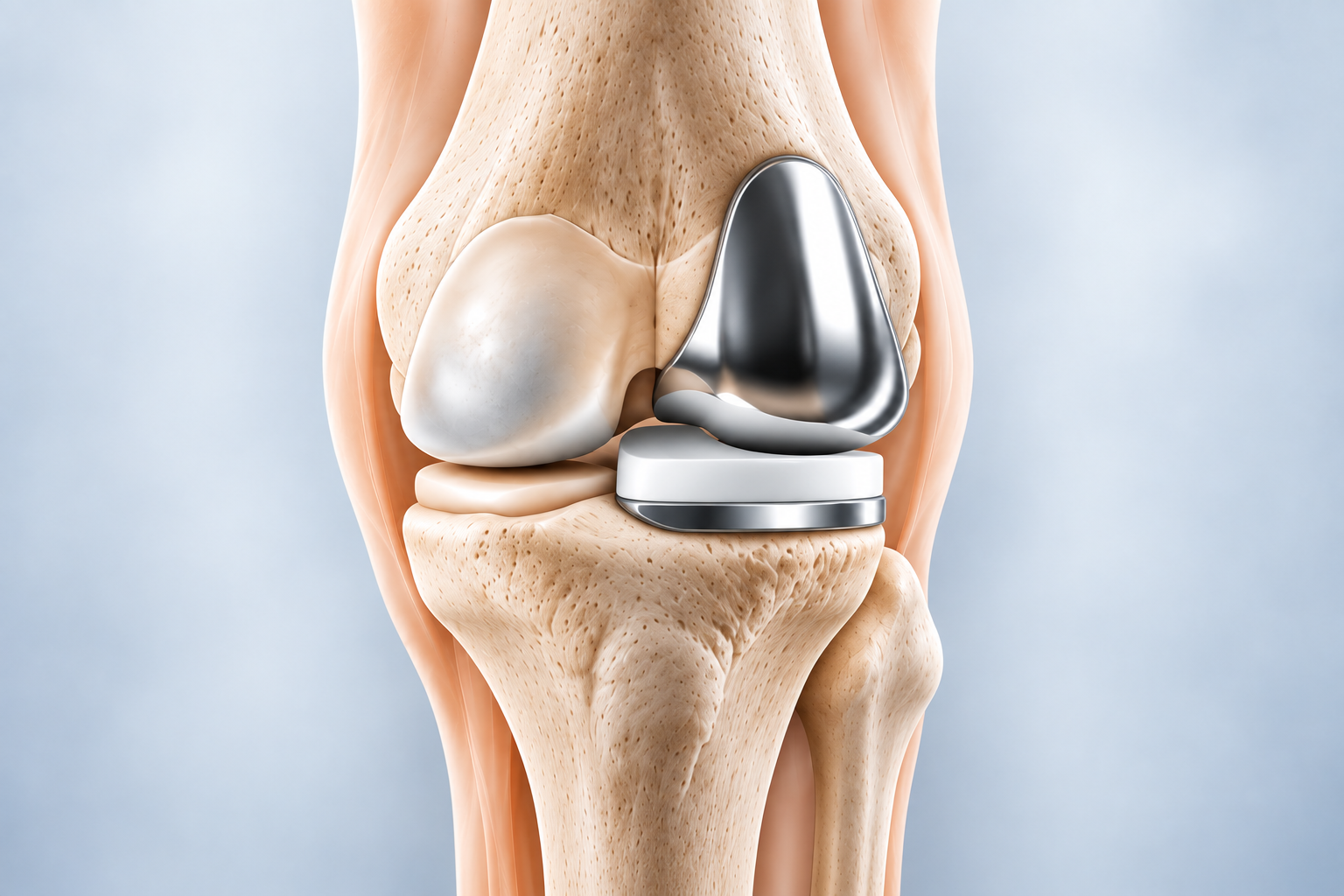
Partial knee replacement implant preserving the healthy areas of the knee joint

What is a partial knee replacement?

A partial knee replacement, also known as unicompartmental knee replacement, replaces only the part of the knee affected by arthritis rather than the whole knee joint.

The knee has three main compartments. When arthritis is confined to one compartment and the remaining areas of the knee are healthy, it may be possible to replace only the damaged portion while preserving more of the patient’s natural knee.

Whether a partial knee replacement is suitable depends on several factors, including the location and extent of the arthritis, the condition of the other parts of the knee and the stability of the knee ligaments. Careful assessment is therefore important when deciding between partial and total knee replacement.

Who is suitable for a partial knee replacement?

Partial knee replacement is suitable for selected patients where arthritis is confined to part of the knee. The decision is based on the pattern of arthritis, the condition of the rest of the joint, ligament function and an individual clinical assessment.

Arthritis limited to one compartment

Partial knee replacement is generally considered when arthritis is confined to one compartment of the knee rather than affecting the whole joint.

Healthy remaining compartments

The other areas of the knee should be sufficiently well preserved for the healthy parts of the natural joint to be retained.

Stable knee ligaments

The stability and function of the knee ligaments are important when determining whether a partial replacement is appropriate.

Individual assessment

Clinical examination and appropriate imaging help determine the extent of arthritis and whether partial or total knee replacement is the better option.

Partial knee replacement vs total knee replacement

Both partial and total knee replacement can be effective treatments for knee arthritis. The most appropriate option depends primarily on which parts of the knee are affected and the condition of the remaining joint.

Partial knee replacement implant replacing one compartment of the knee

Partial knee replacement

A partial knee replacement resurfaces only the compartment affected by arthritis, preserving the healthy parts of the knee.

  • Replaces only the affected compartment
  • Preserves more of the natural knee
  • May be suitable when arthritis is confined to one area
Total knee replacement implant showing artificial knee joint components

Total knee replacement

A total knee replacement resurfaces the joint when arthritis is more widespread and affects more than one part of the knee.

  • Replaces the damaged joint surfaces across the knee
  • May be appropriate when several compartments are affected
  • Provides an alternative when partial replacement is not suitable

The right operation depends on the pattern of arthritis and the individual knee — not simply on age. Mr Bhangoo assesses both partial and total knee replacement options when advising which approach is most appropriate.

Learn more about knee replacement →

Potential benefits and considerations

For appropriately selected patients, partial knee replacement can offer several potential advantages because more of the natural knee is preserved. However, it is not suitable for every pattern of knee arthritis and there are important considerations when deciding whether it is the right procedure.

Potential benefits

  • Preserves more of the natural knee

    Only the arthritic compartment is replaced, allowing healthy bone, joint surfaces and ligaments to be retained where appropriate.

  • Smaller operation

    Partial knee replacement involves replacing less of the joint than a total knee replacement.

  • Potential for a more natural-feeling knee

    Preserving more of the patient’s own knee structures may contribute to a knee that feels more natural for some patients.

  • Recovery may be quicker

    Some appropriately selected patients may experience a quicker early recovery compared with total knee replacement, although recovery varies between individuals.

Important considerations

  • Suitable only for selected patients

    Partial knee replacement is generally considered when arthritis is confined to an appropriate part of the knee and the remaining joint is sufficiently well preserved.

  • Arthritis may progress elsewhere

    Over time, arthritis can develop or progress in other parts of the knee that were not replaced.

  • Further surgery may sometimes be required

    As with any joint replacement, further surgery or revision may occasionally be needed in the future.

  • Individual outcomes vary

    Recovery, function and the longevity of a knee replacement vary between patients and depend on several individual factors.

What happens during partial knee replacement surgery?

Partial knee replacement is designed to replace only the part of the knee affected by arthritis while preserving the healthy areas of the joint. The exact surgical approach is tailored to the individual knee and the pattern of arthritis.

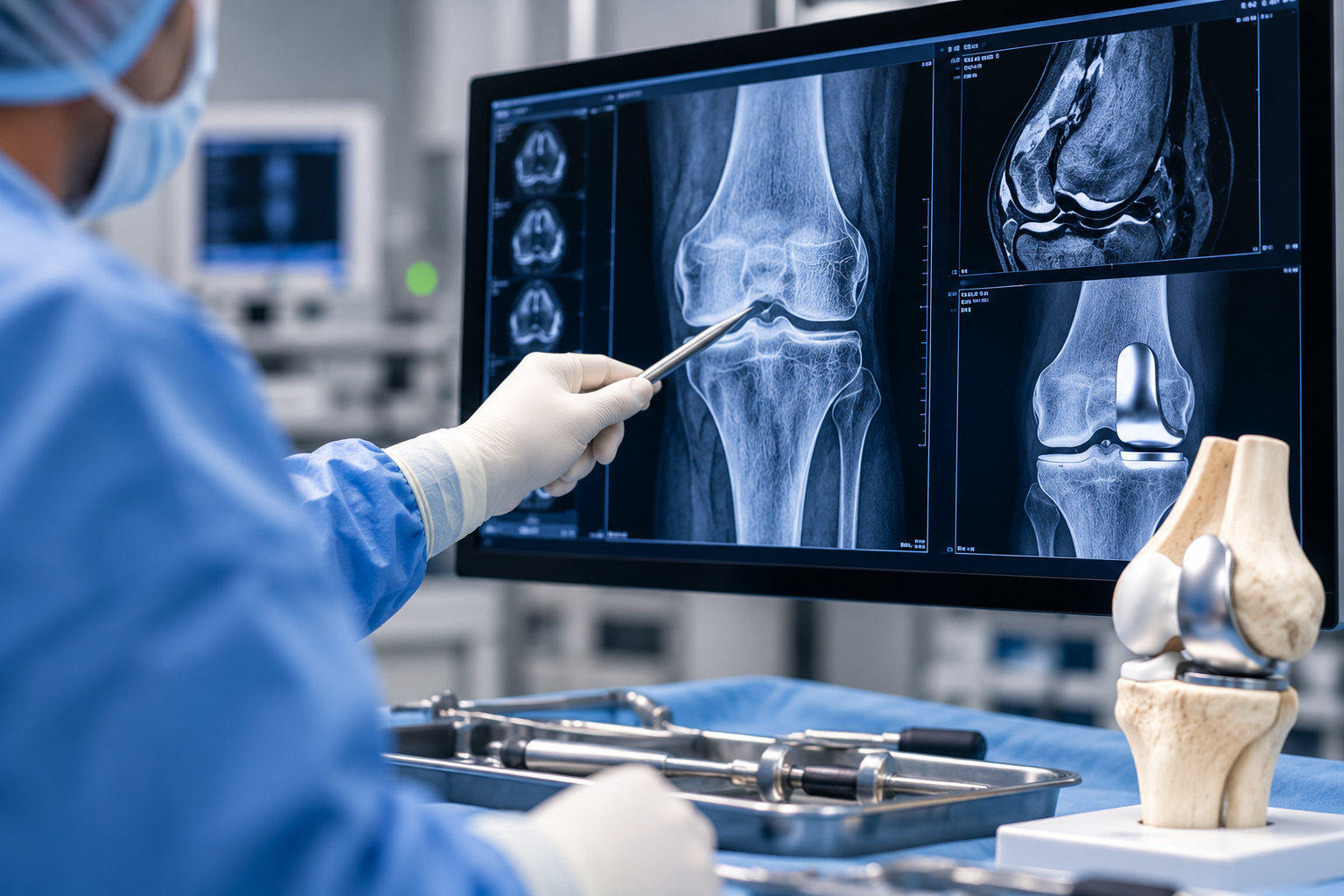
Orthopaedic surgeon reviewing knee X-rays when planning partial knee replacement surgery
  1. Planning the procedure

    Clinical assessment and imaging are used to identify which compartment of the knee is affected and to plan the position and size of the replacement.

  2. Replacing the damaged compartment

    During surgery, the damaged joint surfaces within the affected compartment are carefully prepared and replaced with appropriately positioned implant components.

  3. Preserving the healthy knee

    The unaffected compartments of the knee are retained where appropriate, preserving more of the patient’s natural bone, joint surfaces and soft-tissue structures than with a total knee replacement.

Specialist partial knee replacement options

Partial knee replacement is not a single approach. Depending on the pattern of arthritis, ligament function and whether one or both knees are affected, different surgical options may be considered. Mr Navjot Bhangoo has specialist experience in assessing and treating a range of partial knee replacement presentations.

ZUK partial knee replacement

The ZUK is a partial knee replacement designed for patients whose arthritis is confined to an appropriate compartment of the knee. Rather than replacing the entire knee joint, the damaged surfaces are resurfaced while healthy areas of the knee are preserved where appropriate.

Mr Bhangoo uses the ZUK partial knee replacement as part of his partial knee replacement practice. Implant choice is considered alongside the individual anatomy of the knee, the pattern of arthritis and the condition of the remaining joint.

During the procedure, trial components are used to check alignment and fit before the final femoral and tibial implant components are placed.

Mr Bhangoo also teaches on the national partial knee replacement course.

Bicompartmental & bilateral partial knee replacement

Some patients have patterns of arthritis that require a more individualised approach. Bicompartmental knee replacement may be considered in selected cases where two areas of the knee are affected while another compartment remains sufficiently well preserved.

Bilateral partial knee replacement refers to partial knee replacement being required in both knees. The appropriate timing and surgical approach depend on the individual patient, the pattern of arthritis and their wider clinical assessment.

Partial knee replacement with ACL reconstruction

In selected patients, arthritis affecting part of the knee may occur alongside deficiency of the anterior cruciate ligament (ACL). In appropriate circumstances, partial knee replacement may be considered together with ACL reconstruction to address both problems while preserving unaffected areas of the knee.

This requires careful assessment of the arthritis pattern, ligament function, knee stability and the patient’s individual circumstances.

Recovery and rehabilitation after partial knee replacement

Recovery after partial knee replacement is a gradual process. Rehabilitation focuses on restoring movement, strength and confidence while allowing the knee to recover from surgery. The pace of recovery varies between individuals and should be guided by clinical progress.

Patient completing physiotherapy rehabilitation after partial knee replacement surgery
  1. Early mobilisation

    Patients are encouraged to begin moving after surgery with appropriate support. Early rehabilitation focuses on safe mobility, knee movement and gradually increasing activity.

  2. The first few weeks

    During the early weeks, swelling and discomfort should gradually settle while walking and knee movement improve. Physiotherapy exercises help rebuild strength and function.

  3. Returning to everyday activities

    Driving, work and other everyday activities are reintroduced according to individual progress, comfort, strength and clinical advice rather than a fixed timetable.

  4. Longer-term recovery

    Strength, movement and confidence can continue to improve over the following months. Rehabilitation can then progress towards the activities that are appropriate for the individual patient.

Read our knee replacement recovery timeline →

Rehabilitation can be supported by specialist physiotherapy, including through the team at Balance Health in Nottingham.

Find out more about physiotherapy at Balance Health →

Specialist expertise in partial knee replacement

Mr Navjot Bhangoo explaining knee treatment options to a patient using an anatomical knee model

Mr Navjot Bhangoo is a Consultant Orthopaedic Knee Surgeon specialising exclusively in knee surgery, with experience in both partial and total knee replacement.

His specialist training has included fellowship experience with Professor Jean-Noël Argenson, an internationally recognised authority in partial knee replacement, and Mr Bhangoo also teaches on the national partial knee replacement course.

This experience is particularly important when deciding whether partial knee replacement is appropriate. The pattern of arthritis, condition of the remaining joint, ligament function and individual patient circumstances all need to be considered when choosing between partial and total knee replacement.

Mr Bhangoo’s approach is therefore based on selecting the most appropriate treatment for the individual knee rather than assuming that one type of knee replacement is right for every patient.

Find out more about Mr Bhangoo →

Ready to discuss your knee?

Book a consultation with Mr Bhangoo to discuss your symptoms, review your knee and understand which treatment options may be appropriate for you.

Book appointment

Frequently asked questions

What is the difference between partial and total knee replacement?

Partial knee replacement replaces only the compartment of the knee affected by arthritis, preserving the healthy areas of the joint where appropriate. Total knee replacement resurfaces the knee more extensively and may be recommended when arthritis affects several parts of the joint.

How do I know if I am suitable for a partial knee replacement?

Partial knee replacement is generally considered when arthritis is confined to an appropriate compartment of the knee and the remaining areas of the joint are sufficiently well preserved. Ligament function, knee stability, symptoms, examination findings and imaging are also considered. A specialist assessment is required to determine whether partial or total knee replacement is more appropriate.

How long does recovery take after partial knee replacement?

Recovery varies between individuals. Walking, knee movement and strength are gradually rebuilt following surgery, with activities reintroduced according to progress and clinical advice. More detailed information is available in our knee replacement recovery timeline.

How long does a partial knee replacement last?

Partial knee replacements are designed to provide long-term treatment for arthritis, but the lifespan of any knee replacement varies between patients. Factors such as implant position, activity, general health and changes elsewhere in the knee can influence long-term outcomes. Mr Bhangoo can discuss the expected benefits and considerations for an individual patient during consultation.

Can I return to sport after partial knee replacement?

Many patients aim to return to an active lifestyle following knee replacement. The type and level of activity that is appropriate will depend on individual recovery, strength, previous activity levels and clinical advice. Rehabilitation should progress gradually rather than according to a fixed timetable.

What is a ZUK partial knee replacement?

The ZUK is a partial knee replacement used in selected patients where arthritis is confined to an appropriate part of the knee. It allows the damaged joint surfaces within that compartment to be replaced while preserving healthy areas of the knee where appropriate. Implant choice forms part of the wider assessment of the individual knee.

Can a partial knee replacement be revised to a total knee replacement?

If arthritis progresses elsewhere in the knee or a partial knee replacement requires further surgery in the future, conversion to a total knee replacement may sometimes be considered. The appropriate treatment depends on the reason for revision and the condition of the individual knee.