
When Should You See a Knee Specialist About Knee Pain?
Knee pain is common, and many minor strains settle with time and sensible self-care. But pain that persists, affects sleep or limits normal life deserves a proper assessment. A knee specialist can help identify whether the problem is coming from the meniscus, ligaments, cartilage, kneecap, alignment or arthritis – and whether treatment needs to involve anything more than rehabilitation.
The right time to seek help depends less on a single pain score and more on what the knee is stopping you from doing, how the symptoms began and whether they are improving.
Signs that it is time to arrange an assessment
Consider speaking to a GP, physiotherapist or knee specialist if:
- pain is stopping you from walking, exercising, working or sleeping normally;
- symptoms are getting worse, repeatedly returning or have not improved with initial self-care;
- the knee regularly swells after activity;
- the knee catches, gives way or feels unstable;
- you cannot fully bend or straighten it;
- you had a twisting injury and the knee has not recovered as expected;
- you have ongoing stiffness, particularly if it lasts more than 30 minutes after waking; or
- you have already tried physiotherapy or activity modification without enough improvement.
These symptoms do not automatically mean that you need an operation. In many cases, the most useful result of a specialist assessment is a clear diagnosis and a focused non-surgical plan.
Symptoms that need urgent medical help
Some knee symptoms should not wait for a routine private appointment. Use NHS 111 or seek urgent medical care if severe pain follows an injury, you cannot bear weight, the knee is very hot and swollen, you have a fever or you cannot bend or straighten the leg. Go to A&E for an obvious deformity, a suspected dislocation, or numbness or loss of sensation in the leg or toes.
What might be causing persistent knee pain?
The pattern of symptoms offers clues, but examination is important because several conditions can feel similar.
Meniscus injury
The menisci are shock-absorbing structures inside the knee. A tear may follow a twist during sport, but age-related tears can occur after an everyday movement. Pain, swelling, catching, locking or difficulty straightening the knee can occur.
Ligament injury
The anterior cruciate ligament (ACL), medial collateral ligament (MCL) and other stabilising structures can be injured during a change of direction, awkward landing or direct impact. Instability or repeated giving way is particularly important to assess in people who want to return to pivoting sport.
Osteoarthritis
Arthritis commonly causes activity-related pain, stiffness, swelling and a gradual loss of function. Symptoms and X-ray appearances do not always match perfectly, so treatment should be based on the whole clinical picture rather than an image alone.
Cartilage or alignment problems
Focal cartilage damage and leg alignment can change how load passes through the knee. In selected patients, treating the underlying mechanics may help preserve the joint rather than simply treating pain.
What happens at a knee specialist consultation?
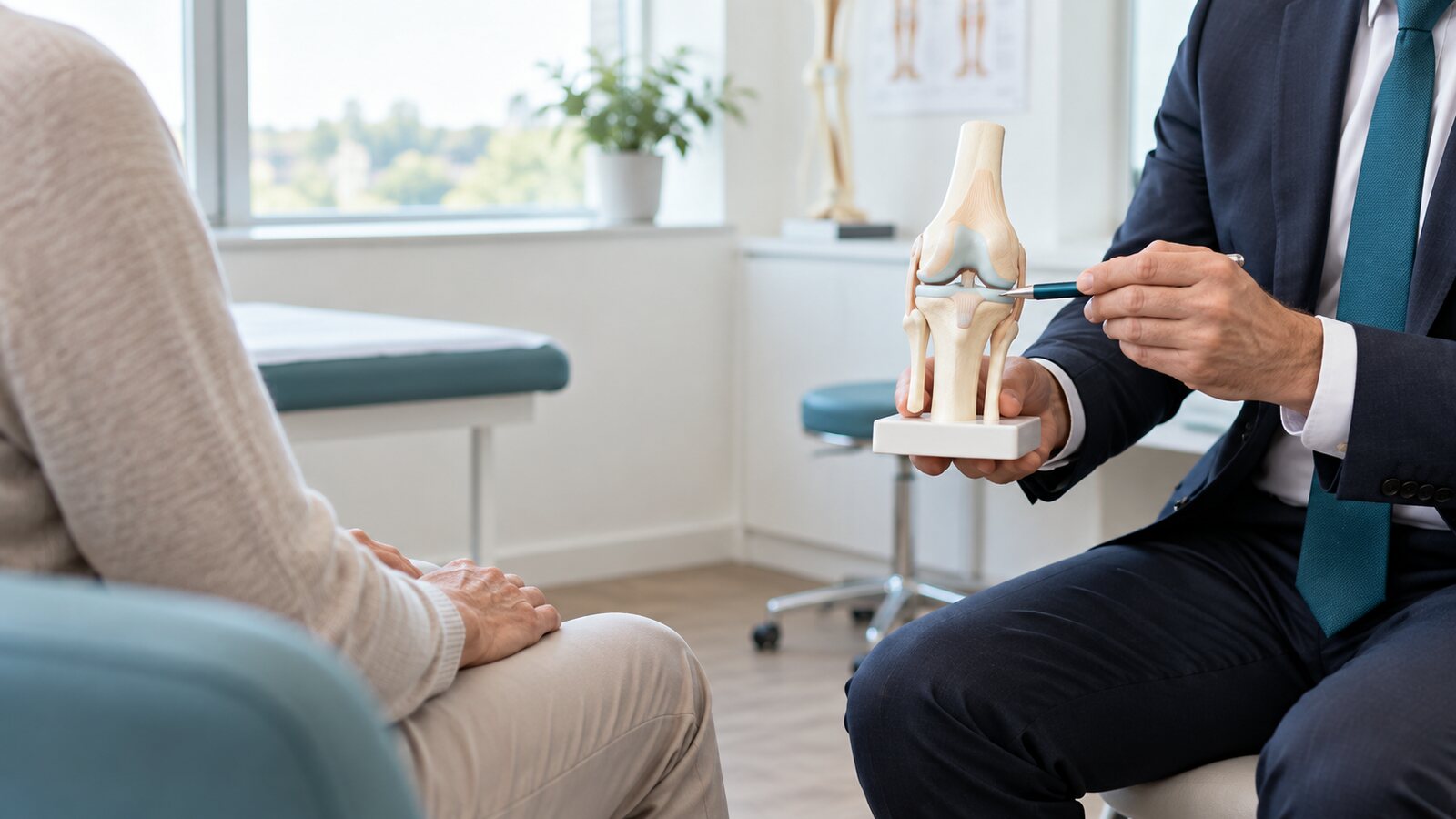
A consultation usually starts with the story of the problem: when it began, where it hurts, what makes it worse and what you want to return to. The specialist will examine movement, stability, swelling, alignment and the areas that are tender.
Imaging is used when it will change diagnosis or treatment. Weight-bearing X-rays can be helpful for arthritis and alignment. MRI can show menisci, ligaments and cartilage, but it is not automatically required for every painful knee.
You should leave with an explanation of the likely diagnosis and the reasonable options. These may include tailored physiotherapy, activity changes, medication advice, bracing, an injection or surgery. A good decision takes account of your symptoms, goals, health, imaging and preferences.
Can you book a private knee specialist directly?
Self-paying patients can usually arrange a private consultation without a GP referral. Most insurers require authorisation and may ask for a GP referral, so check the terms of your policy first.
Mr Navjot Bhangoo assesses knee problems at clinics in Nottingham and Derby, including sports injuries, meniscal and cartilage problems, arthritis, alignment and knee replacement. To arrange an appointment, use the Elite Knee Care booking page or contact the secretarial team.
FAQs
Do I need an MRI before seeing a knee specialist?
Usually not. Bringing previous scans is helpful, but the appropriate imaging can be chosen after your history and examination.
Does clicking mean that my knee is damaged?
Painless clicking is common and is not always a sign of injury. Clicking accompanied by pain, swelling, locking or giving way is more useful to assess.
Will a knee specialist always recommend surgery?
No. Many knee conditions are managed without surgery. The purpose of the consultation is to reach a diagnosis and discuss the benefits, limits and risks of all suitable options.
Clinical sources
- NHS: Meniscus tear (updated 2 September 2026), https://www.nhs.uk/conditions/meniscus-tear/
- NHS: Knee pain, https://www.nhs.uk/conditions/knee-pain/
- NICE NG226: Osteoarthritis in over 16s – diagnosis and management, https://www.nice.org.uk/guidance/ng226