The Bezenar Fellowship: Bringing World-Leading Knee Surgery Expertise Back to the Midlands
An international fellowship in knee preservation, cartilage restoration and reconstruction — and its relevance for patients in the East Midlands.
I was privileged to be awarded the Christian Bezenar Travelling Fellowship, an opportunity to spend time in the United States learning directly from surgeons with internationally recognised expertise in knee preservation and reconstruction.
For me, the significance of the fellowship lay in the exchange of knowledge: exploring how experienced teams approach difficult knee problems, weighing treatment options and considering the evidence behind them. It was a valuable opportunity to reflect on my own specialist practice and the decisions that matter to patients.
The fellowship brought together areas central to my approach at Elite Knee Care: cartilage restoration, meniscal preservation and transplantation, ligament reconstruction and complex knee preservation.
Learning from leaders in knee preservation
Knee preservation surgery aims to retain as much of the natural joint as is appropriate. Depending on the problem, this may involve treating damaged cartilage, repairing a meniscus, reconstructing a ligament or addressing the way forces pass through the knee.
These structures work together. A cartilage injury cannot always be considered separately from meniscal function, ligament stability or leg alignment. Learning from surgeons who work extensively in this field offers an opportunity to examine that relationship in depth, alongside patient selection and rehabilitation.
The aim is to identify when preservation is a reasonable option, what it can realistically achieve and when another approach may be more appropriate.
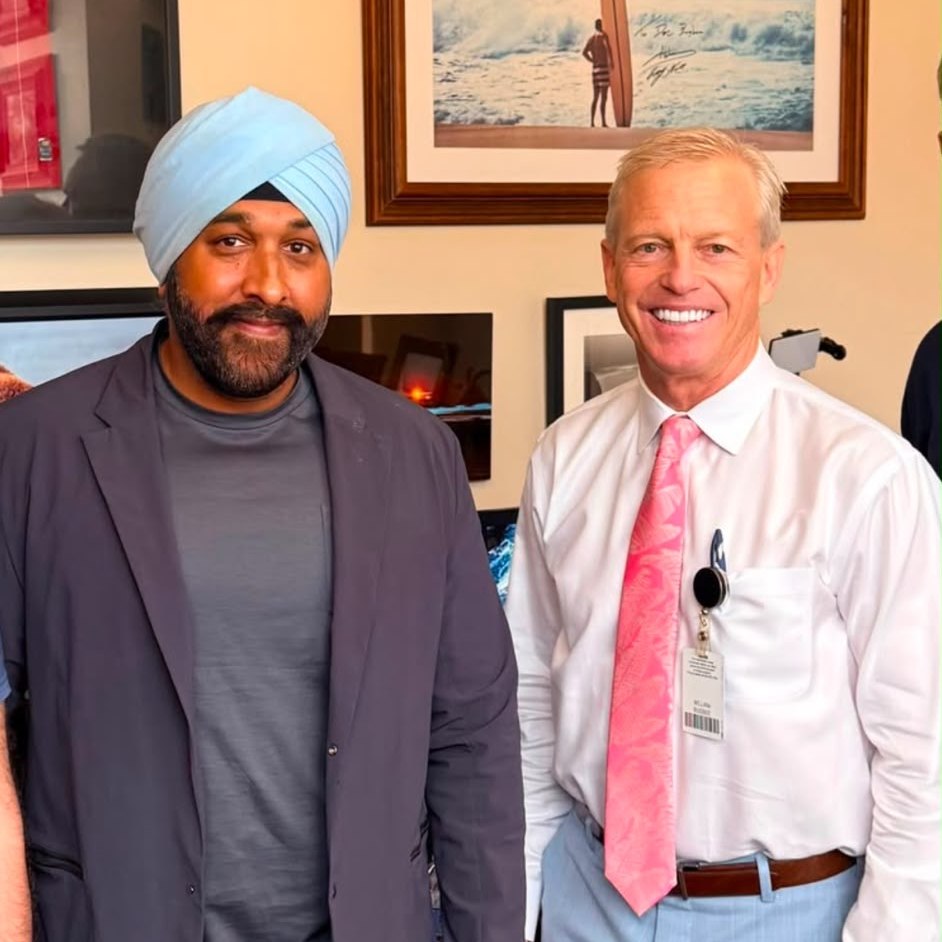
Professor Brian Cole — Chicago
One of the highlights of my fellowship was spending time with Professor Brian Cole in Chicago. Professor Cole is an orthopaedic sports medicine surgeon at Midwest Orthopaedics at Rush and a professor at Rush University Medical Center. His clinical and research work includes cartilage restoration, meniscal transplantation and joint preservation.
The opportunity to learn directly from him was particularly valuable given the close relationship between these areas. The meniscus helps distribute load through the knee, while the smooth articular cartilage covers the ends of the bones. Damage to either can affect the environment in which the other functions.
Meniscal transplantation may be considered for selected patients with persistent symptoms following substantial loss of meniscal tissue. Cartilage restoration also encompasses several different procedures, with suitability depending on the nature of the defect and the condition of the wider joint. Neither is a universal solution for knee pain or established widespread arthritis.
This experience reinforced the importance of looking beyond the damaged structure and understanding the whole knee. Read more about meniscus injuries and treatment.
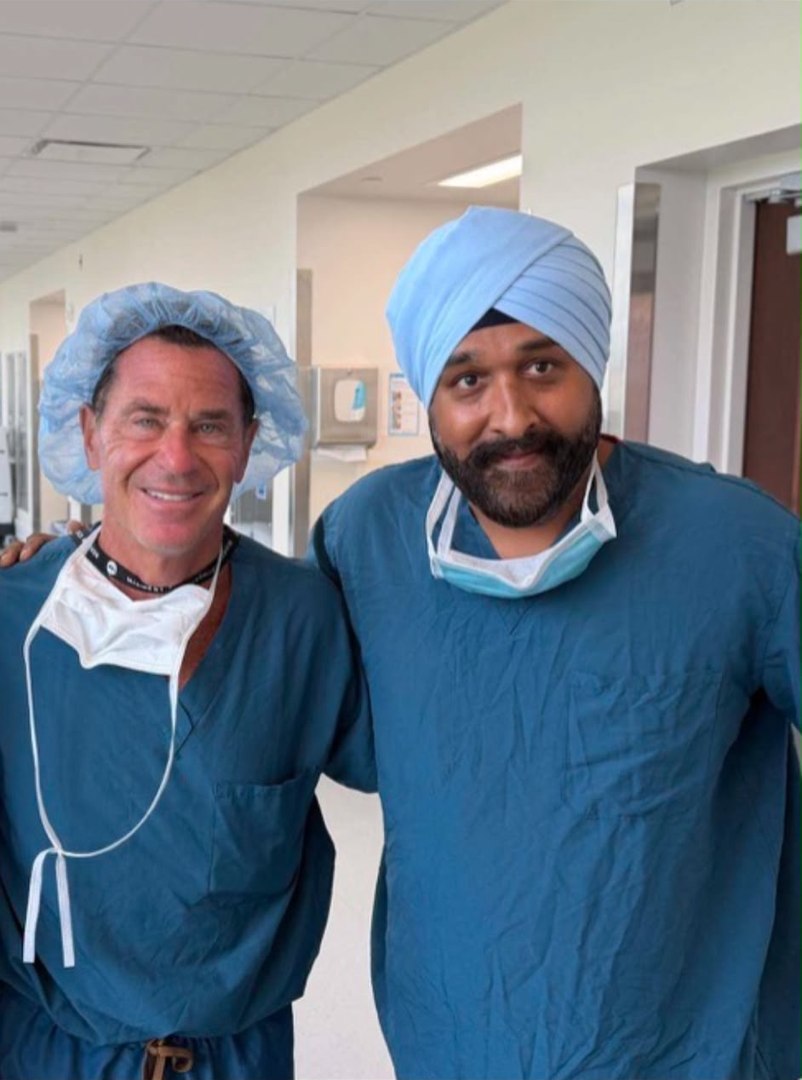
William (Bill) Bugbee — osteochondral allograft transplantation
My fellowship also provided the opportunity to learn from William (Bill) Bugbee in California. Based at Scripps Clinic, he has extensive clinical and research experience in cartilage restoration and osteochondral allograft transplantation.
An osteochondral allograft is donated tissue containing both articular cartilage and the underlying bone. In selected patients, it can be used to replace a localised area of damaged joint surface. It differs from a metal-and-plastic knee replacement because it uses biological tissue.
Understanding this approach involves more than the surgical technique. The size and location of the damage, the condition of the remaining joint, meniscal function, stability and alignment all influence whether it is appropriate. Graft availability and the demands of rehabilitation also form part of the discussion.
Learning from Bill Bugbee provided valuable perspective on this area of complex knee preservation, including the need to balance technical possibilities with realistic expectations for the individual patient.
Understanding the science behind donor tissue processing and transplantation
The fellowship also included opportunities to deepen my understanding of donor tissue processing and transplantation. This is an important part of the science behind allograft surgery, even though it takes place away from the operating theatre.
Donor assessment, screening, tissue handling, storage, graft matching and traceability all matter. For cartilage grafts, maintaining the viability of cartilage cells is another important consideration. The requirements vary with the tissue and the intended procedure.
Understanding this wider pathway helps place the operation in context. It also reinforces respect for tissue donors and their families, whose generosity makes transplantation possible.
Bringing international expertise back to the Midlands
International learning is most valuable when it informs thoughtful decisions at home. For my patients in Derby, Nottingham, Leicester and across the East Midlands, that means considering specialist treatment options in the context of their symptoms, examination, imaging and personal goals.
The fellowship has added to my perspective on knee preservation and reconstruction. It informs how I assess complex problems and discuss the potential benefits, limitations and rehabilitation associated with different approaches.
It does not mean that everyone needs advanced surgery. Sometimes the most appropriate plan is physiotherapy, activity modification or another non-operative treatment. Where surgery is considered, the decision should reflect the individual knee and the evidence supporting the proposed procedure.
Looking beyond a single operation
A painful knee may have more than one contributing problem. Ligament instability can affect function and place additional demands on other structures. Significant malalignment can change how load passes through the joint. These factors may need consideration alongside cartilage or meniscal damage.
My practice spans ACL and sports knee surgery, knee alignment assessment and treatment, preservation procedures and knee replacement. This breadth matters when discussing which approach best fits a particular problem.
For some patients, joint preservation may be appropriate. For others with arthritis, partial knee replacement or total knee replacement may offer a more suitable option. A considered treatment plan also includes recovery, rehabilitation and the possibility that further treatment may be needed over time.
Specialist knee expertise for patients across Derby, Nottingham and Leicester
For someone seeking a specialist knee surgeon in Derby or Nottingham, or travelling from Leicester and the wider East Midlands, the starting point is a clear understanding of the problem.
I aim to explain what is causing symptoms, which options may be relevant and what each involves. That includes discussing uncertainty, the risks of surgery and the commitment required for rehabilitation. Treatment should support an informed decision that makes sense for the patient’s everyday life, work and activity goals.
You can read more about my background and specialist knee practice.
Preserve. Repair. Replace.
The Christian Bezenar Travelling Fellowship reflects a principle at the heart of Elite Knee Care: continuing to learn so that treatment decisions remain informed, considered and individual.
Preserve the natural knee where appropriate. Repair damaged structures when a repair is suitable. Replace arthritic joint surfaces when replacement is the right option.
These are complementary approaches. The aim is to understand the whole knee and select treatment that is appropriate for the person in front of me.
Discuss your knee and your treatment options
If knee pain, injury or arthritis is affecting your daily life or activity, I can assess your knee and discuss which treatment options may be appropriate for you.